


Phishing test of employees
Testing employees through simulated phishing attacks is one of the most effective ways to explain to employees the seriousness and reality of the possibility of such attacks, to familiarize them with the threat and teach them how to respond appropriately.
We can help you
What is a phishing attack and its risks
A phishing attack is a form of cyberattack in which an attacker creates fraudulent emails to trick users into believing they come from a trusted source. The aim of this attack is to obtain sensitive information such as login credentials, passwords, banking or other sensitive information. In addition, this type of attack attempts to spoof a trusted email attachment, which, when opened, allows the attacker to access the organisation’s internal network.
Risks associated with phishing attacks
24Loss of sensitive information:
One of the biggest risks for businesses is the loss of sensitive data such as customer personal information, trade secrets, internal documents and other important information. Leaks of this data can lead to financial losses, reputational damage and breaches of data protection laws.
Reputational damage:
Cyber incidents such as data leaks can seriously damage a company’s reputation. A loss of credibility with customers and the public can have long-term consequences and affect a company’s market position.
Loss of business and clients:
Cyberattacks can cause loss of business and clients, especially if sensitive customer information is leaked. Customers may lose trust in the company and switch to a competitor.
Disruption of operations:
A phishing attack can cause a business disruption if IT infrastructure is significantly damaged or important data is stolen.
Financial losses:
Cyber attacks can cause serious financial losses to companies. This can include theft of funds, fraud, ransom payments to attackers and costs associated with restoring and securing the network and systems.
Legal implications:
Companies may face legal consequences as a result of cyber incidents. This includes fines for data breaches, lawsuits from affected individuals, and attorney’s fees.
Potential further attacks:
After a successful phishing attack, a company may face the risk of further cyberattacks as attackers can gain access to internal systems and networks.
Cyber blackmail:
Some phishing attacks involve blackmail threats, where attackers demand money from a company in exchange for data recovery or an end to the attack.
Employees as a key cybersecurity risk
One of the biggest, but often overlooked, cybersecurity risks are the employees themselves, as their behaviour, negligence and lack of awareness can pose a serious threat to organisations. Current statistics show that attackers are increasingly targeting people within companies as a weak point through which they can breach defences and gain access to sensitive data and systems. Despite advances in technology and strong security measures, the human factor often remains the weakest link in protecting organisations. It is therefore essential that organisations invest in educating and building employee awareness of cyber risks so that they become active partners in protecting the business from these ever-evolving threats.
“Sooner or later, the user will have to make a key decision: delete it or open it? Since the success of a hacking attack may depend on this decision, every company should ask itself – would my employees stand up to it?”
Zymestic Solutions, a.s.

Threats in figures
International statistics

83 %
organisations admitted to experiencing a successful phishing attack in 2022, compared to only 57% in 2021

64 %
data leaks are caused by human error

24 %
attacks based on phishing campaigns are successful
About the service
What you get
Employee Awareness
Our tests help employees better understand phishing threats and increase their vigilance when handling emails and links. This can lead to employees being less likely to fall victim to phishing attacks.
Risk reduction
The client will reduce the risk of sensitive data leakage due to successful phishing attacks. This can protect the reputation of your organisation and minimise potential damage.
Regular monitoring
The possibility of regular phishing tests and training allows the client to maintain a high level of security over time. This is important because cyber threats are constantly evolving.
Individual approach
Our services are designed to be tailored to the needs and size of the customer’s organisation. This means that the client gets a solution that is specifically tailored to their unique requirements.
Testing progress
Realistic phishing simulations
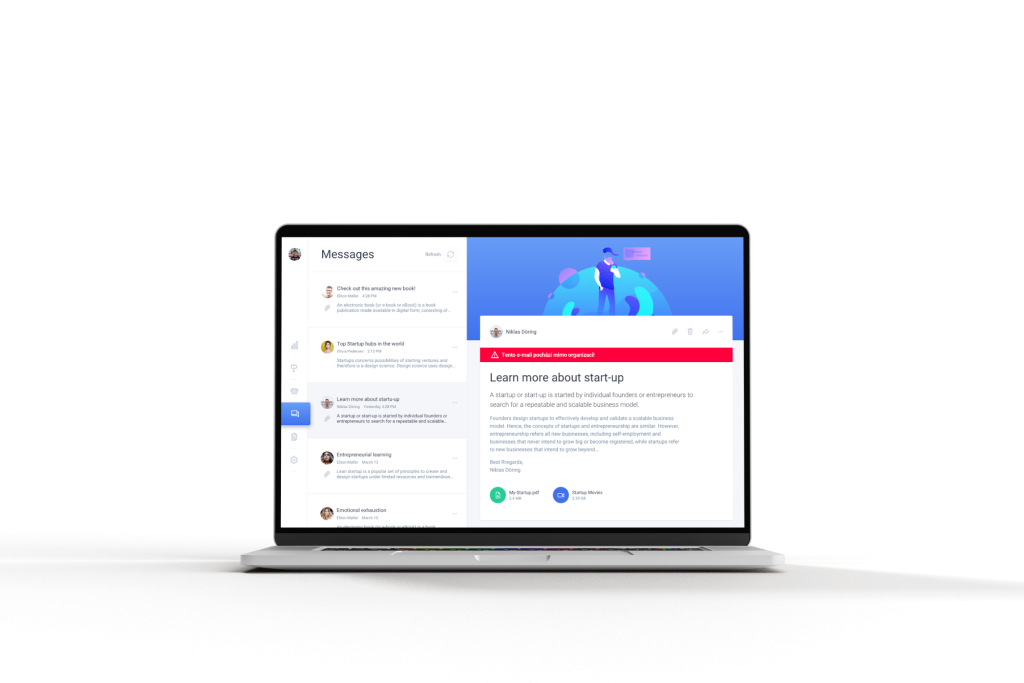
The first step is to run realistic phishing simulations. This includes creating fake phishing emails and messages that mimic real threats. These emails may contain suspicious links, attachments or requests for sensitive information.
Phishing test distribution:
- Selected employees of the organisation receive these fake phishing emails. The goal is to observe how they respond to these emails, whether they click on links, open attachments or respond to requests for sensitive information.
Monitoring and analysis of reactions:
- Employee reactions are monitored during the testing period. This includes whether they clicked on links, opened attachments or provided sensitive information. These reactions are thoroughly analysed.
Reports and evaluation:
After the phishing tests are performed, a detailed report with results and analysis is prepared. The report contains information on the success rate of attacks, identified risks and recommendations for improving security.
Training and education:
Based on the results of the organisation’s tests, we are addressing employee training in cybersecurity. This training is designed to improve employee awareness of phishing threats and help them recognize and respond to potential attacks.
Repeat tests:
- The phishing test service should be repeated at regular intervals. This iteration is important because cyber threats are constantly evolving, and an organisation should remain capable of responding to new methods of attack.
Packages and prices
Standard
30 000 CZK
Frequency of tests
One-off testing of all employees
Number of employees
Testing for up to 250 employees
Templates
Choose from 3 ready-made templates
Reports
Detailed and analytical reports with graphs and analyses
Recommendation of security measures
Presentation of results and proposal of measures
Expert
45 000 CZK
Frequency of tests
One-off testing of all employees
Number of employees
Testing for up to 1,000 employees
Templates
Individually crafted phishing email
Reports
Detailed and analytical reports with graphs and analyses
Security measures
Presentation of results and proposal of measures
Individual
On request
Frequency of tests
One-off testing of all employees
Number of employees
Individually
Templates
Individually
Reports
Detailed and analytical reports with graphs and analyses
Security measures
Presentation of results and proposal of measures
How to contact us easily? Leave us a contact.
We’ll be happy to call you. Free.
Need help or have questions? We are here for you! Email us, call us or fill in the form and we will be happy to answer you. Your satisfaction is our priority.